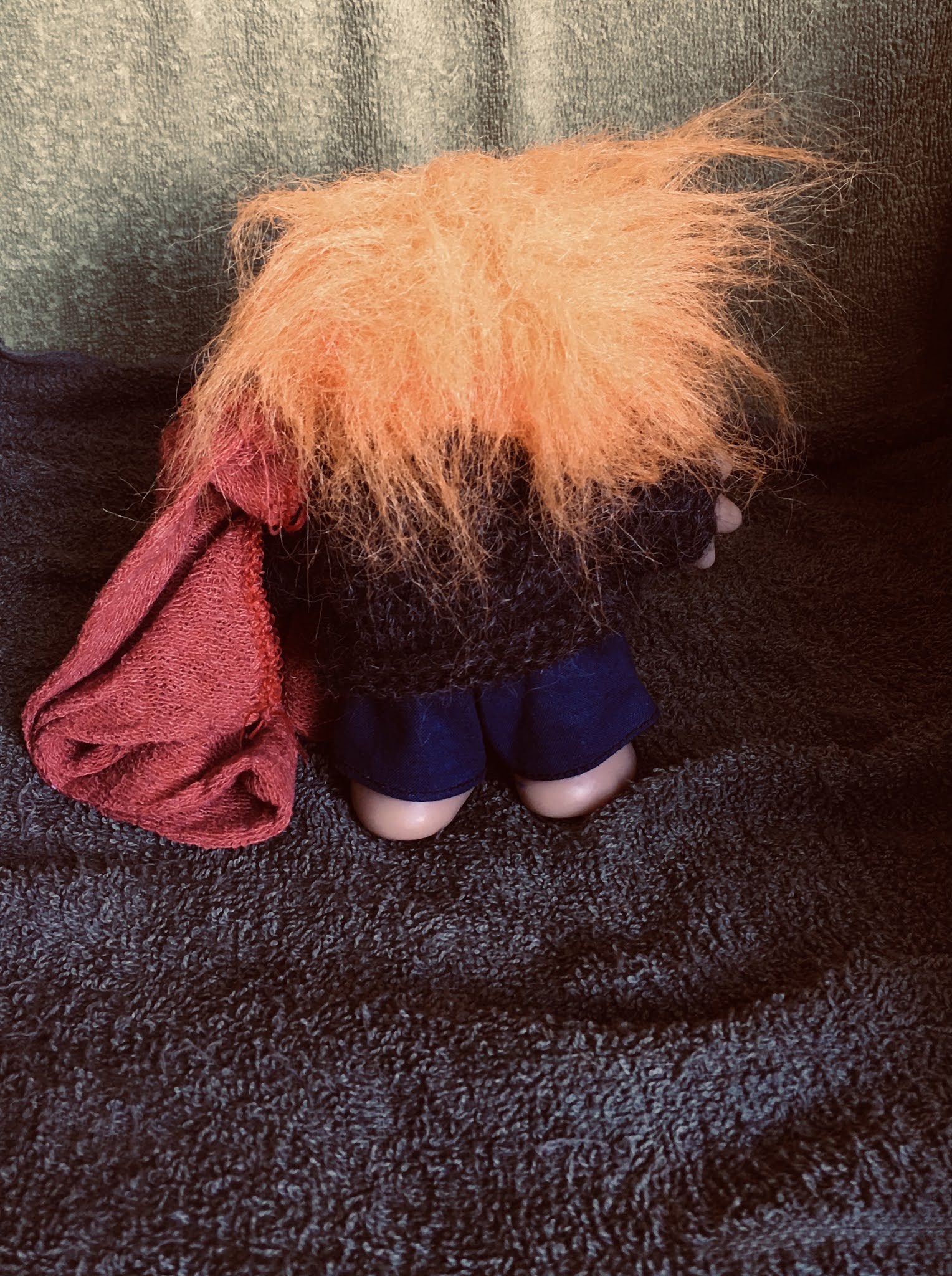
Tuesday, May 25, 2021

Fath Ead

 “Why do people in books call each other fath ead?” Hineni asked Two Hours Max, as they sat by the fire on that evening in late May, with Two's blanket round their shoulders just to be sure — it was very cold once the sun had gone down.


“What?” Two turned their head to look at him in puzzlement. “Call each other what?”


“Fath ead,” said Hineni.


Two Hours Max blinked, and continued to frown. Hineni could see the cogs turning inside. Then their expression cleared.


“Oh! Right! I see! Fat head.”


Hineni felt a little hurt by this. “I’m sorry? Why . . . ?”


“Fat head. It’s what they’re saying. Not fath ead. It’s because you only ever saw it written down, Hineni.” 


Hineni’s mouth dropped open as he took this in.


Then he felt really stupid.


“Not only that,” Two Hours Max said hastily, “but you know Dr Syooss? Yes? Who wrote The Cat in the Hat and Green Eggs and Ham? Well, apparently his name is actually Dr Soyss.” Two nodded impressively as he watched the surprise in Hineni’s face. “I know, right? Soice like voice. Who’d a thought it? And not only that, but there are psychopaths all over Holland.”


“Psychopaths . . .” Hineni faltered uncertainly. “Are you sure?”


“Well I was when I heard it said.” Two Hours Max grinned at him. “But not when I saw it written down.”


"Fath Ead," they added, affectionately.

Becoming friends with Two Hours Max

All through that cold, wet spring, Hineni spent a lot of time with Two Hours Max. 


Hineni had several brothers and sisters, but even so he had sometimes been lonely. Wabi and Sabi mainly lived in their own arcane world. They even spoke their own language sometimes, that no one else really understood. Hineni loved his sisters, but they were younger than him, and sometimes he had things on his mind they didn’t really understand. They often wanted him to play with them, and he would, but sometimes pretending to be horses or dressing up as brides lost its appeal. In Two Hours Max he found a friend he could really talk to.


Hineni would be thirteen that summer, and Two Hours Max had their fifteenth birthday last autumn, so they were not the same age, but near enough to get on well. They were both interested in birds and plants, in philosophy and poetry, and in the stars. There was so much to talk about. Even so, Two Hours Max never stayed long. They’d show up on any given day after lunch at some point, and before tea time they’d get a bit restless, and murmur, “I think I have to be going now,” and wander away back into their own world.

They never stayed more than a couple of hours, and they never talked much about their life at home.


“Two, do you have a girlfriend — or a boyfriend?” Hineni asked one day, in what he hoped was a casual sort of way. 

Two Hours Max looked at him. “Why?”


“I just wondered,” said Hineni. “I didn’t mean to pry.”


“Dignity and privacy are both gifts we give each other,” said Two Hours Max. “There’s no need to ask about those things.”


“I’m sorry,” said Hineni humbly. “I didn’t mean to spoil everything. I take it back.”


There was a silence.


Then Two Hours Max said, “No, I don’t. I think I want to be a nunk.”


“A what?” Hineni frowned. “Do you mean a nun or a monk?”


“Yes,” said Two Hours Max. “That one. I want to be just myself. All round my body is a sort of coat of light and peace, and I like it to remain entire. I can’t manage too much mingling. And I get tired of people who never go away, even if I like them. After a little while I begin to go mad inside. I have to be just quietly, where I can breathe.”


Hineni thought about this.


“Oh. Am I . . . ? Is this . . . ? I don’t get on your nerves, do I?”


“No,” said Two Hours Max firmly. “No, you don’t. But look, I have to go now. I’ll see you soon.”


And off they went. They never looked back or waved, just walked quietly away. But Hineni knew they would come back. He didn’t know how he knew it, but he felt completely sure he could trust that Two Hours Max was a true friend, and would be for ever.


Monday, May 24, 2021

In which Hineni meets Two Hours Max

Hineni and Shanti walked slowly home together. Shanti carried the bag of food they’d been out to buy. They had raspberries and a cucumber, a bar of chocolate and a loaf of bread, some butter and sausages and one of those white cabbages that looks like a football.

All the way along the road, Hineni picked up every dry twig he could find that the wind had blown down from the trees or dogs had got bored of holding or nesting birds had dropped. He gathered quite a bundle, and that made him happy because everyone knows dry sticks make life possible and it’s more than tricky to get a fire going without them even if you have plenty of cardboard packaging to tear up.


When they got home, Shanti went to stow the food away for the moment, and Hineni ran to find Sophia, who was his mother, to show her how many sticks he’d collected and put them ready in the basket, for lighting the fire later on.


But Sophia and Kanso had a guest, so Hineni just whispered quietly about the sticks (and Sophia was really pleased), then he sat beside her and looked at the guest, who was talking about crows. Hineni thought the visitor looked about his own age — or maybe a little bit older — and he was very interested to meet this . . . boy troll . . . or was it a girl?


“This is Two Hours Max,” said Kanso to Hineni after a while. “They just called in to pick up a blanket we’d put on Freegle, and we had the kettle on and were just about to have a cup of tea, so they stayed for a glass of juice and a cookie.”


So Hineni and Two Hours Max said hello to each other, and Hineni told Two Hours Max about their own crows, and how last year’s baby had a partner now. 


Two Hours Max was very interested (not just polite), and told Hineni about the ravens nesting at Fairlight and where the best place would be to get a glimpse of them.


Then Two Hours Max said they had to go now,  and said thank you several times for both the drink and the blanket. 


“It’s been so lovely to meet you,” said Sophia. 

“Come again,” said Kanso; and Two Hours Max said they would.


“Maybe next week?” Hineni suggested. In his experience things sometimes didn’t happen at all if you failed to fix a time.


Two Hours Max smiled. “That would be lovely,’ they said. “Same time, same place! I’ll see you then. Thank you.”


Hineni stood with Sophia and watched Two Hours Max walk peacefully down the road carrying the blanket.


“I like that person’s voice,” said Hineni; “it’s soft and quiet. But was that a girl troll or a boy?”


“I expect so,” said Sophia; “or maybe not.”


“Well, which one?” Hineni looked up at her, puzzled. “I like to get things straight.”


“Yes,” said Sophia, “but not everything and everyone is straight. Sometimes you just have to know this is a person, and be content for them to be entirely unique, unfolding in a way particular to them.”


“Oh,” said Hineni. “Why is he or she called Two Hours Max?”


“For the same reason as you are called Hineni,” said Sophia; “because that’s who they are.”


“Well it’s a very unusual name,” said Hineni.


“Yes,” said Sophia. “I think Two Hours Max might be quite an unusual person.”


 “Why did they need a blanket?” Hineni asked.


“They didn’t say,” said Sophia; “and I didn’t ask. Two Hours Max felt like the kind of person who might not like too many questions.”


Hineni nodded. “It is what it is”, he said.


“That’s right,” said Sophia.


Friday, May 21, 2021

Serena had something on her mind

 I don’t know how good your memory is.

A long time ago, we had the story about searching for the lost Granny, and in the end she was found and came back to her family to live.


The last story was called Anawim Sisters. It told about the Anawim family, and why they came to be on their travels and the long and dangerous journey they made to find their way to the garden. 


And there were pictures of all the different people in the Anawim family. One of them was Serena. The story said she looked a bit worried. Did she have something on her mind?


And, yes. You know, it turned out that Serena was feeling worried about something. If you want to know what, you can read on . . .


The day after Shanti — the lost Granny — came home, Sophia was hanging out washing in the garden when Serena came to find her.


“Mummy,” said Serena, “there’s something I have to tell you.”


“Oh, yes?” Sophia said; but she didn’t stop what she was doing, not because she wasn’t interested but because she thought Serena sounded worried, and Sophia thought Serena had been looking worried — and sometimes it is easier for people to tell you about their problems if you are looking at something else, not at them. So Sophia smiled at Serena, then she carried on hanging out the washing.


And Serena said, “Mummy, it was all my fault Granny got lost.”


This didn’t seem all that likely to Sophia, but part of treating other people with respect is taking them seriously, and not just telling them they’re talking nonsense even if you think they are. Because people have their reasons.


So Sophia just said, “Was it, Serena? Why do you think that?”


She glanced down at Serena, who was looking really quite scared.


And Serena said, “Mummy, Granny went back to fetch my teddy, because I was so upset when we had to leave him behind. I had him with me right up to when we came across the sea. I brought him with me tucked inside my sweater, and then it all got so muddly and it was dark, and he dropped out, but I didn’t notice at first. When I realised I’d lost him, we were in too much of a hurry to go back and look. Daddy said we must run, we had to find somewhere to hide. So I had to leave my teddy behind. And Granny asked me why I was crying. When I told her, she just said not to worry, it would be all right. She said I should stay with Grandad and hold his hand and everything would be okay. So that’s what I did. It wasn’t until we got to this garden in the morning that Buji noticed Granny wasn’t with us. And the reason why was because she went back to look for my teddy.”


Sophia had finished hanging up the washing. She had been listening carefully to what Serena had to say.


“Are you sure?” she said then.


[I think you should remember that question. “Are you sure is one of life’s most brilliant questions. Please try to commit it to memory, as it is bound to come in useful as you go through life. “Are you sure?” is a very shrewd thing to ask. And “shrewd” means you have your head screwed on. There are no flies on you.]


Serena nodded. She was entirely sure. When everyone had got over the excitement of Shanti (the Granny) being restored to them, and their attention had turned to the next most important thing, which was making breakfast, Shanti had come to stand beside Serena and said to her quietly, “I found him.”


Serena was pleased — of course she was — to be reunited with her teddy, because she loved him very much and it was hard to get to sleep at night without hm there beside her. But at the same time she felt guilty, and ashamed, because it was all her fault Granny had got lost; and she was frightened in case her Mummy would be angry.


“Well?” Sophia asked her. “Did Granny find him for you?”


“Yes,” Serena said, in a small voice. “She did. But I thought you might be cross with me, so I’ve kept him hidden in my sweater.”


“No kidding!” said Sophia. “For goodness sake! You’d better let him out. It would be a pity if Granny went to all that trouble and then teddy bit the dust because he couldn’t breathe!”


So Serena took the teddy out from inside her sweater. And teddy could breathe again, and so could Serena. Nobody was cross with her. Granny was safe. It was going to be okay after all.


Wednesday, May 5, 2021

In parenthesis (That means inside brackets)

 These stories were originally written down in my main blog Kindred of the Quiet Way, but I brought them across here to be all in one place. I realised I left this one — which was the very first one — behind. It tells you about Danshari and Hanafubuki.

The Lion and the Unicorn are two majestic creatures. 

People have thought of the Lion's mane as being like a crown or even like the rays of the sun — a glorious, kingly beast. Do you know the name for a group of lions who live together? Yes, that's right — we call it a "pride of lions". In folk-lore, lions stood for royal majesty.

The Unicorn is a noble beast from the world of myth and legend — and people said its beautiful shimmering horn had miraculous powers, and could even cure illnesses and get rid of wickedness and restore life. In folk-lore, unicorns stood for spiritual strength.

Where I live — Hastings in England's East Sussex — on the road that runs along the shore of the sea, at the back of Debenhams there's a small strip of garden with a stone pillar either end. One pillar has a statue of a lion, and the other has a unicorn. They are old now, their stone bodies all pitted by the salt and wind, and the unicorn has lost his horn. 

In the old days, England chose the Lion to be a symbol of English pride and power. And Scotland chose the Unicorn.

This is where the children's nursery rhyme comes from, about the Lion and the Unicorn. James I of England unified the two kingdoms of Scotland and England in 1603, so the lion and the unicorn are on the coat of arms of the United Kingdom. But this uniting was not altogether kind and friendly. The English are not known for gentleness [and the Scots aren't, either. Ed]

The nursery rhyme goes like this: 

The lion and the unicorn were fighting for the crown.

The lion beat the unicorn all around the town.

Some gave them white bread and some gave them brown,

Some gave them plum cake and drummed them out of town.

And when he had beat him out, he beat him in again;

He beat him three times over, his power to maintain.

Hmm.

So lions and unicorns may live together, but there are murky depths to the relationship. 

But I know at least one lion and one unicorn who try to be good friends, even though it isn't always easy.

Hanafubuki is a unicorn.

Hanafubuki is a lovely name, but it's a bit of a mouthful isn't it, so he lets us call him just Fu. Fu de unicorn —


Danshari is a lion. Not quite so difficult to remember as Hanafubuki, but people do like to shorten names, don't they. So most people call him Dan. Dan de lion.

Here he is with his friend Fu.


Danshari — you can call him Dan, most people do, but I like his whole name — finds he has to be very patient and respectful with Hanafubuki (who you can call Fu if you like).

Unicorns, you see, are somewhat one-pointed in their thinking. They like to go their own way. When I was a child, my sister gave me a birthday card I loved, that said on the front:

They tried to persuade me not to cross the curious hills,

Calling me foolish, stubborn.

That's how it is, I said.

I'm going where my pig is headed.

And that could have been written about a unicorn.

You can't argue with unicorns. And, truth be told, I'd advise you against trying to argue with a lion as well, but Danshari is a quiet and reasonable soul. Most of the time.

And he works hard at becoming a good person, reading and thinking about the path he's on.


Hanafubuki does too.


Danshari has mixed feelings about Hanafubuki's reading choices.


He does what he can to find something they can enjoy together.


And most of the time, they live together in peace.


Hanafubuki likes to sit right at the front of the shelf, so he doesn't feel hemmed in. But Danshari murmurs, "Mate, you aren't Pegasus," and keeps a protective arm round Fu so he doesn't fall off. Danshari never minds squodging into the corner. True kingliness, he knows, starts with humility. Besides which, it's a long way to fall.


One Sunday Hanafubuki had a big day at The Campfire Kids Church, when we were thinking hard about unicorns.


Well, some of us were. Others are easily distracted.


Tuesday, May 4, 2021

Anawim sisters

 Ready to meet the sisters in the Anawim family's children? You remember the brothers? Wabi and Sabi who are twins. 


They belong together, and people often mix them up, but they are quite distinct. if you made friends with them, you would soon see the difference—that Wabi is a gentle, solitary kind of person, who just likes being quietly on his own outside in the garden. Sabi likes things that are comfy and scruffy — his favourite old sweater that he's had since time began, and his mug that may be chipped and tea-stained but is somehow indefinably perfect. They are happy in each other's company, content with the simple things in life. 

And their brother Hineni, always eager to help and cheerful from the moment he opens his eyes in the morning. If someone is wanted to run up to the store, or give a hand with washing up the tea things, Hineni is usually the very first to volunteer. "I'll go," he says, "I'll help! I'll do it!" Nine times out of ten, it's Hineni who brings the Haffenhaff in from the pasture, and milks her in the evening.


By the way, the Haffenhaff has a name, too. Her name is Lavinia.

So, do you feel as though you are getting to know the Anawim children a bit better — the boys, anyway? And you remember their mother is called Sophia, and their father is Kanso, and their Grandad is Ananda, and the lost Granny is called Shanti.

If I took this page away, could you remember all of that? My, doesn't it take some doing, to get to know people?!

On to the sisters in the Anawim, family, then.

This is Irene.


She is younger than Wabi and Sabi, but older than Hineni. I think you would like Irene. She's what we sometimes call a peace-maker. Irene smooths things over — and don't we always need someone who has such a valuable gift? Irene never ruffles your feathers. Somehow, things just flow along with her. 

Then comes Hineni, and after that is Serena.


I would like you to look carefully at Serena. She's another quiet and gentle soul — she just flows along like a river with no one really watching it, she gets on with life without being a bother to anyone (I hope you do, as well). But I would say — I may be wrong — that Serena looks just a little bit worried in this photograph. I wonder if she has something on her mind? 

Two more sisters to go.

Almost, but not quite, the youngest child is Buji. What a sweetheart. 


Buji is a contented spirit. Somehow, you only have to look at her, and you know everything will be all right in the end. There is something about Buji that makes you feel safe and secure.

And then we come to Shekinah, the baby of the family.

Here's Sophia carrying her, because Shekinah was tired at the time. It had been a long day.


Shekinah is one of those naturally happy people. A shining spirit. She is a child full of faith. When things go wrong and times are difficult, Shekinah is like the ember that you can light a new fire from. Even though she is only little, she sees the light in things. It is a great gift.

That feels like a very big family.

Look — here they all are, on the day they set out from home. As you can see, that was before they lost Shanti. There she is, right in the middle of them, where she belongs.


They didn't leave home just for fun, you know. A whole lot of things went terribly wrong.

First of all, the desert was getting bigger, and the wind blew sand all over the vegetables in their garden. But they didn't panic; the knew what to do about that. They knew you have to make berms (do you know what those are?) to catch the rain when it fell, and plant trees and lots and lots of plants, leaving no bare earth at all. Then the wind can't blow it away. They saved all their vegetable scraps to make compost, and they had chickens and Lavinia the Haffenhaff to fertilise (do you know that word?) the garden. They worked hard and managed to keep a little patch of green alive.

But then war came to their country. People were angry and frightened, partly because they were hungry after their farms and gardens started turning to desert. Soon the place was full of soldiers in uniforms and men with guns. Kanso was told he had to go and fight, and he didn't want to do it. He is a brave man, as full of courage as he is kind — it was just that he didn't want to kill anybody. So the army said they were going to come and put him in prison.

While they were trying to decide whatever to do, some people set their house on fire. They only just had time to grab what really mattered to them, and run away.

They had some money in the bank that the grown-ups had been saving for a long time, and they used it all up on two things. They bought an i-phone — I think you know how important and useful that is. It has a torch and maps and your email and a clock and a telephone and means you can pay for things without needing money in your pocket (though you still need some money in the bank of course).

The second thing they bought was a place for each one of them on a boat across the sea. This wasn't a big boat like a cruise ship with cabins and lovely things to eat. It was just an inflatable (that means you have to blow it up) dinghy, nothing more. And they had to be smuggled — had to go at night. The Anawim knew all about the Great Bear before they even met her in person. They saw her in the stars.

When they arrived on our island, they had their phone, and a very tiny bit of money left in the bank. Enough for some groceries, but not enough for a house to live in, not even a rented one. Not even a caravan. All they had left was each other, and hope, and trust in God. Which is how they came to turn up in the garden. They needed some help.

So, do you remember their names? 

Ananda and Shanti.

Kanso and Sophia.

Then Wabi and Sabi,

Irene,

Hineni,

Serena,

Buji

and little Shekinah.


You know what I think? They did almighty well to get Lavinia across the sea on a rubber dinghy! I don't think I could have done it.


But I wonder what was worrying Serena?


Talking round the fire

 They never imagined so many days would go by with no sign of the lost Granny. They thought she would be just nearby, somewhere down the track. Maybe she had been picking mushrooms and got left behind, or sat down for a snooze and didn't know which way everyone else had gone when she woke up. But the sun went down . . . and rose . . . and set . . . over many days, with no sign of the Great Bear or YĆ«gen or George Fox or the Anawim men — and no lost Granny.

While they were waiting — Danshari and Hanafubuki and the Anawim mother and children — they spun out the time in conversation.

The Anawim children practised saying "Danshari" and "Hanafubuki", and the lion and the unicorn tried Haffenhaff milk in their tea — it was nice.

When you meet someone new, you start with finding out who they are. And then you learn about where they have come from, and what they like and what they do.

This is what Danshari and Hanafubuki learned.

The Anawim mother's name was Sophia. Their father — away searching for the lost Granny — was called Kanso. The Grandad's name was Ananda.

"What was your Granny's name, again?", asked Hanafubuki.

"She is called Shanti," said Sophia.

And then of course all the children had names as well, but I don't want you to drown in new names!

There's Danshari (you know him)


Hanafubuki


Ebenezer


Sophia (chatting to Danshari)


Kanso


Ananda (with his grandson Hineni).


And the lost Granny is Shanti.

Can you manage a couple more?

In the picture with Kanso are his twins, Wabi and Sabi. You mostly find them together.

Here they are with Danshari and Hineni, sitting by the fire.


What a lot of new names to take in! And of course, Wabi and Sabi and Hineni had four sisters as well! Perhaps we'd better leave them for next time.

By the way — when the evening came, the day the Anawim arrived in the garden, after Danshari had lit the fire and they were all sitting round it, eventually Irusu crept in to sit with them. 


They just let her come back. They didn't say anything. Sometimes it's better not to.


To her surprise, Irusu found it was okay, sitting talking with the Anawim. She liked them. They were quiet and kind, with soft voices — not overwhelming at all.

She listened carefully, with Danshari and Ebenezer and Hanafubuki, to the story of their travels — which had been long and dangerous and full of adventure. When she heard all that had happened to them, Irusu began to feel really glad they had found this safe and peaceful place beside the fire. She began to hope the lost Granny would soon be found, so they could all come home safely, and be part of the family.


Invasions

  Irusu the little dog usually enjoys pottering around the garden in the morning, sniffing at everything and looking at the birds and squirr...